
Tooth Extractions – Lutz, FL
Removing a Tooth to Save Your Smile
Is one of your teeth severely damaged due to accidental facial injury? Do you have an infection in a tooth that is potentially spreading to the rest of your mouth? If so, our team can provide you with tooth extractions in Lutz as a last resort for saving your smile. With this procedure, we can help protect your other pearly whites from disease in the long run. We will also discuss your tooth-replacement options if necessary so that you can enjoy a full and healthy grin. Keep reading to learn more about this procedure or call our office to schedule a consultation!
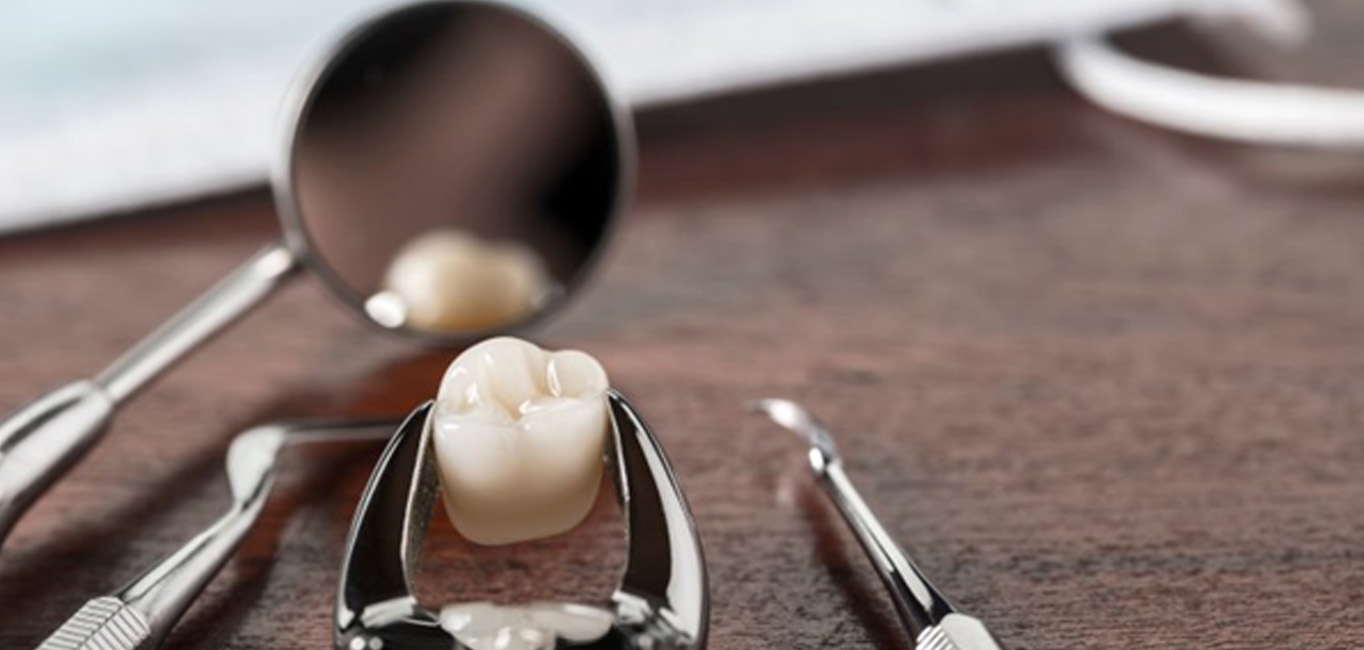
Why Choose Allure Dental Boutique for Tooth Extractions?
- Offers Multiple Sedation Dentistry Options
- Evening Hours Available
- Professional & Caring Dental Team
Reasons Why Tooth Extractions Are Necessary

Patients who are struggling with a heavily decayed or damaged tooth will likely be recommended tooth extractions to protect the rest of their smiles. While the main goal is to help people retain their natural pearly whites, disease and infection can end up spreading throughout the body via the bloodstream. In most cases, our team will try to use dental crowns or perform root canal treatment to resolve the issue. But if the tooth isn’t salvageable, then removing it is usually the best option.
Some of the main reasons for tooth extractions involve:
- Dental decay that’s spreading and causing severe damage to the tooth and surrounding tissues
- A tooth is extremely damaged and cannot be fixed with a dental crown
- Gum disease is spreading and making surrounding teeth become loose
- Orthodontic treatment is needed but certain teeth need to be removed to make space for movement
- A child’s baby tooth needs to be extracted to make room for the adult tooth
- A wisdom tooth is impacted and causing discomfort
The Process of Removing a Tooth
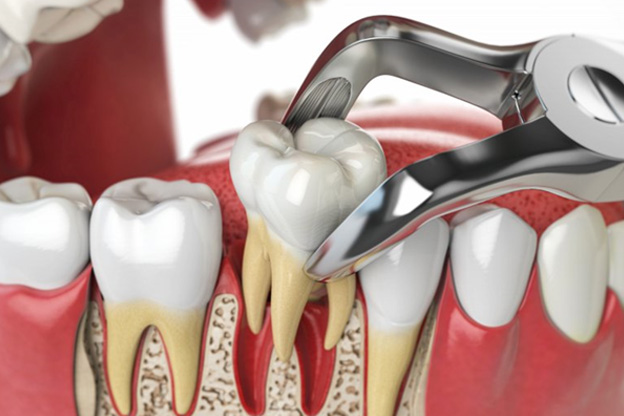
Dr. Tehrani will first administer a local anesthetic to your mouth to ensure you’re completely pain-free throughout your procedure. Our team can also provide sedation dentistry to further increase comfortability. We will then utilize special dental tools to remove your tooth.
The tooth will be lifted from its socket via a dental elevator, making it easier to extract. We will then use forceps to grab and gently wiggle it back and forth until it detaches from the connective tissues. After this procedure, you’ll be sent home to recover. Once you’ve properly recovered, our team can work on replacing the missing tooth with either a dental bridge, denture, or dental implant to avoid jawbone deterioration and future tooth loss. If it’s a wisdom tooth, you likely won’t need to replace it.
Tooth Extraction Aftercare
After undergoing a tooth extraction, be sure to implement the following tips so that you can have a smoother recovery:
- Refrain from using a straw when drinking or spitting, as these can disturb the blood clots forming around the extraction site
- Take prescribed/over-the-counter pain relievers as instructed
- Get plenty of sleep to improve the healing process; keep your head elevated to avoid blood rushing to the mouth
- Place gauze on the surgical site and use a cold compress to alleviate swelling
- Avoid smoking or using tobacco products
- Rinse your mouth gently with salt water the day after your surgery to keep your mouth disinfected
- Visit your dentist if you notice any discomfort or changes following your treatment
Tooth Extractions FAQs
Is There an Alternative Treatment for a Tooth Extraction?
Many patients get nervous when they learn they need to have a tooth removed, and wonder if there are any feasible alternative treatments that might help improve their dental condition instead. In some cases, like if you have a severe toothache, a root canal followed by a dental crown can alleviate the infection causing your pain and allow you to continue using your tooth to eat, speak, and smile naturally.
However, if Dr. Tehrani recommended extraction, she likely has already determined that no other treatments would be effective. In many cases, this procedures is recommended as a last resort to preserve your remaining teeth when one has become too severely injured or infected to be fixed successfully.
Does it Hurt to Remove a Troublesome Tooth?
It’s natural to feel nervous about more complex procedures that might hurt, such as tooth extractions, but Dr. Tehrani and the rest of our compassionate team will do everything we can to help you feel at ease throughout your appointment.
For example, before starting your treatment, we’ll apply a local anesthetic to numb your mouth and prevent it from sending pain signals to your brain. You might feel some pressure while we work, but not outright pain.
Then, it’s normal to feel sore and swollen for several days afterward. You can help reduce aches and inflammation by applying an ice pack to the tender side of your face for 15-mintues at a time, or taking over-the-counter medications, such as ibuprofen or acetaminophen.
Can I Leave the Space Empty After My Procedure?
If you’re hoping to avoid another procedure or simply want to reduce potential out-of-pocket expenses, you might be wondering whether it’s completely necessary to replace your extracted tooth, especially if the gap is located in the back of your mouth where no one is likely to see it.
But missing teeth can potentially detract from your dental health. For instance, those that remain are prone to shifting out of alignment to fill in the empty space, which can wear down your enamel unevenly and contribute to cavities, disease, or injuries.
As a result, our team in Lutz usually recommends replacing it as soon as possible. We’re happy to discuss the options with you and recommend an appropriate solution based on y our unique circumstances.
What are the Options for Replacing Extracted Teeth?
There are a few potential ways to rebuild your smile after removing one of your teeth, and our team is happy to provide suggestions to meet your individual needs after your extraction.
Some possible solutions include:
- Partial dentures can be used to replace one or several sporadically missing teeth throughout your mouth.
- Dental bridges. These oral appliances contain the required number of teeth positioned between a dental crown on either end that anchors to healthy abutment teeth or dental implants on each side of the gap in your grin.
- Dental implants. A single implant post can be positioned into your jawbone to replace your missing tooth, then is capped with a customized dental crown made from resilient ceramic that reflect light like enamel.